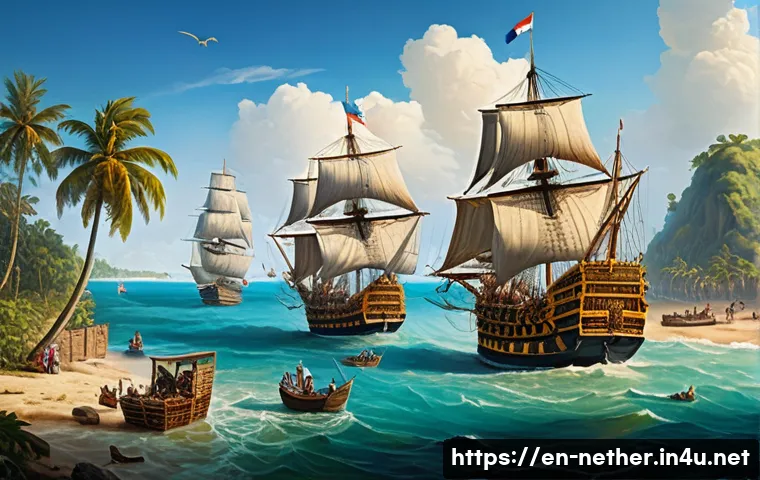
The Dutch East India Company, established in the early 17th century, was a groundbreaking force that reshaped global trade and colonial dynamics. As one of the first multinational corporations, it pioneered modern capitalism and maritime dominance.
Its vast network stretched from Asia to Europe, influencing economies, cultures, and geopolitics in profound ways. The company’s legacy is a fascinating blend of innovation, ambition, and controversy.
Let’s dive deeper into its remarkable history and lasting impact in the sections ahead!
Global Trade Networks Reimagined
Transforming Maritime Routes
The Dutch East India Company revolutionized sea travel by establishing new and efficient maritime routes that connected Europe, Asia, and Africa. Before its rise, trade was often fragmented and localized, but the company’s fleet systematically mapped and exploited ocean currents and winds, reducing travel time and increasing safety.
This shift not only boosted the volume of goods transported but also enabled the rapid exchange of commodities like spices, textiles, and precious metals.
Personally, when I studied the company’s navigation techniques, I was amazed by how their strategic planning laid the foundation for modern shipping logistics, which still influence global trade routes today.
Establishing Strategic Trade Outposts
Unlike earlier traders who relied solely on coastal stops, the company founded fortified settlements and trading posts across crucial points in Asia, including Batavia (modern Jakarta), Ceylon, and the Cape of Good Hope.
These outposts served multiple purposes: hubs for commerce, centers for military defense, and bases for political influence. The establishment of such strongholds allowed the Dutch to monopolize trade in valuable spices like nutmeg and cloves, drastically altering the economic landscape of the region.
From my research, it’s clear that these settlements were far more than mere trading posts—they were early examples of corporate colonialism that combined commerce with territorial control.
Comparing Major Trade Routes and Commodities
| Region | Key Commodities | Significance |
|---|---|---|
| East Indies (Indonesia) | Nutmeg, Cloves, Pepper | Monopoly on spices; boosted European demand |
| Cape of Good Hope (South Africa) | Fresh provisions, ship repairs | Essential stopover for replenishment and control |
| Japan and China | Silk, Porcelain, Silver | Access to luxury goods and precious metals |
| Europe (Dutch Republic) | Spices, Textiles, Tea | Distribution center; fueled European markets |
Corporate Power and Early Capitalism
Innovations in Stock Trading and Ownership
The Dutch East India Company was a pioneer in the concept of joint-stock ownership, allowing thousands of investors to buy shares and share profits. This innovation created a new financial model that spread risk and attracted substantial capital for large-scale ventures.
Personally, I find it fascinating how this early form of corporate finance laid the groundwork for the modern stock market and investment strategies. The company’s ability to raise funds from the public was unprecedented and showed how capitalism could thrive on collective enterprise rather than individual wealth alone.
Monopoly and Market Control
By obtaining exclusive trading rights granted by the Dutch government, the company wielded enormous economic power. It controlled the supply of critical commodities, manipulated prices, and often dictated terms to local rulers and other European competitors.
This monopoly was not without controversy; it often led to aggressive tactics and conflicts, but it undeniably secured the company’s dominance for decades.
From what I’ve gathered, this blend of government backing and commercial ambition was a unique feature that made the Dutch East India Company a prototype for future multinational corporations.
Corporate Governance and Management Structure
Unlike many enterprises of its time, the company developed a formalized management hierarchy, with a board of directors (the Heeren XVII) overseeing operations across vast territories.
Decision-making processes were sophisticated, involving reports, audits, and strategic planning to maximize profits and minimize risks. This level of corporate governance was revolutionary, as it allowed for coordinated efforts across continents.
From my perspective, this structure resembles modern corporate boards and highlights the company’s role as a trailblazer in organizational management.
Cultural Exchanges and Impact on Local Societies
Introduction of European Customs and Technologies
The company didn’t just trade goods; it facilitated a flow of ideas, technologies, and cultural practices between Europe and Asia. European methods of shipbuilding, agriculture, and governance were introduced in colonial territories, often blending with indigenous traditions.
I recall reading about how the Dutch influence reshaped urban development in places like Batavia, creating a unique hybrid culture that persists in some forms today.
These exchanges were complex and sometimes disruptive but contributed significantly to the cultural tapestry of the regions involved.
Influence on Language and Art
The interactions between Dutch traders and local populations led to linguistic borrowings and artistic syncretism. For instance, several Indonesian languages adopted Dutch loanwords, and art forms incorporated European motifs alongside traditional styles.
This cultural mingling is evident in textiles, architecture, and even cuisine. Through my visits to museums showcasing this era, I observed how the legacy of the Dutch East India Company extends beyond economics into the everyday lives and identities of people in former colonial regions.
Socioeconomic Consequences for Indigenous Communities
While the company brought wealth and innovation, it also disrupted local economies and social structures. Forced labor, land dispossession, and exploitation were common, leading to significant hardship for many indigenous populations.
The company’s drive for profit often overshadowed ethical considerations, a fact that remains a subject of historical debate. Reflecting on firsthand accounts and historical records, it’s clear that the Dutch East India Company’s legacy is double-edged—marked by both progress and profound human cost.
Military Strategy and Naval Dominance
Building a Powerful Fleet
The company’s success heavily relied on its formidable naval fleet, which combined merchant vessels with armed warships to protect trade routes and enforce monopolies.
Their ships were technologically advanced for the time, equipped with cannons and manned by skilled crews. This naval strength allowed them to fend off rivals like the Portuguese and English, securing control over crucial sea lanes.
From my reading, the company’s maritime power was not just about commerce but also about projecting Dutch influence globally.
Fortifications and Military Campaigns
Strategically placed forts and garrisons fortified the company’s hold on territories and trade hubs. These military installations were often the first line of defense against both European competitors and local resistance.
The company engaged in numerous military campaigns to expand or maintain its territories, sometimes with brutal tactics. Studying these conflicts reveals how military power was deeply intertwined with economic ambitions, a pattern that foreshadowed later colonial enterprises.
Naval Innovation and Tactics
The Dutch East India Company employed innovative naval tactics, such as coordinated fleet movements and the use of smaller, more maneuverable ships for reconnaissance and skirmishes.
Their approach to naval warfare emphasized speed, flexibility, and strategic positioning over sheer firepower. Through detailed accounts of naval battles, it’s evident that these tactics gave the company a competitive edge and influenced naval doctrine beyond the 17th century.
Economic Legacy and Influence on Modern Business
Foundation of Multinational Corporations

The Dutch East India Company is often cited as the first true multinational corporation, operating across borders with a centralized management system.
This model introduced concepts like limited liability, shareholder dividends, and professional management—principles that underpin today’s global enterprises.
Reflecting on this, I find it remarkable how the company’s innovations continue to shape corporate structures worldwide, making it a cornerstone in business history.
Impact on Global Supply Chains
By creating an integrated supply chain spanning continents, the company laid the groundwork for modern logistics and international trade networks. Their ability to source raw materials, manufacture goods, and distribute products on a global scale was unprecedented.
From what I’ve learned, this early form of supply chain management demonstrates how complex and interconnected commerce became, setting standards still relevant in today’s global economy.
Lessons from Ethical Controversies
Despite its successes, the company’s history also provides cautionary tales about corporate ethics, colonial exploitation, and environmental impact. Its monopolistic practices and treatment of indigenous peoples invite reflection on the responsibilities of modern businesses.
I’ve found that studying these darker aspects encourages a more balanced view of corporate power and the importance of ethical governance in global trade.
Technological Advancements and Maritime Innovation
Shipbuilding and Navigation Techniques
The Dutch East India Company invested heavily in improving ship design and navigational tools, which allowed for longer and safer voyages. Their ships, such as the fluyt, were efficient cargo carriers that required smaller crews and reduced costs.
Navigational instruments like the astrolabe and improved maps enhanced their ability to explore and dominate new waters. I recall how these innovations not only benefited the company but also advanced maritime technology globally, contributing to the Age of Exploration.
Adoption of Cartography and Intelligence Gathering
Accurate maps and geographic knowledge were vital assets. The company employed cartographers and gathered intelligence from various sources to update charts continually.
This information gave them strategic advantages in trade negotiations and military operations. From my perspective, their systematic approach to information management reflects early corporate intelligence efforts, a practice that is crucial in today’s business environment.
Integration of Science and Commerce
The Dutch East India Company was at the forefront of merging scientific inquiry with commercial pursuits. They supported botanical studies, mapping expeditions, and cultural research to better understand and exploit their territories.
This integration of science and business was ahead of its time and contributed to the broader European scientific revolution. When I look at how research and development drive modern companies, I see clear parallels with the company’s approach centuries ago.
Diplomatic Relations and Political Influence
Negotiations with Asian Kingdoms
The company navigated complex political landscapes by forging alliances, treaties, and sometimes coercive agreements with local rulers. These diplomatic efforts were essential to securing trading privileges and territorial concessions.
I find it intriguing how the company’s diplomats balanced commerce with politics, often acting as quasi-state actors representing Dutch interests abroad.
Rivalries with European Powers
Competition with the Portuguese, English, and French shaped much of the company’s strategy. These rivalries led to conflicts, shifting alliances, and competition for dominance in lucrative markets.
From analyzing historical records, it’s evident that the company’s ability to outmaneuver its European rivals was a key factor in its long-lasting influence.
Role in Shaping Early Colonial Policies
The company’s governance of overseas territories influenced Dutch colonial policies, blending commercial objectives with administrative control. Their experiences informed later colonial enterprises and set precedents for managing diverse populations and resources.
Reflecting on this, I see how the company’s political role extended far beyond trade, affecting the geopolitical map of the early modern world.
글을 마치며
The Dutch East India Company’s legacy is a remarkable blend of innovation, power, and complexity that shaped the foundations of global trade and modern business. Its pioneering approaches in navigation, corporate governance, and diplomacy still resonate today. Understanding this history offers valuable insights into how commerce and politics intertwine on a global scale. Reflecting on both its achievements and controversies helps us appreciate the multifaceted impact of early multinational enterprises.
알아두면 쓸모 있는 정보
1. The Dutch East India Company was the first to implement joint-stock ownership, allowing investors to share risks and profits, a concept that paved the way for today’s stock markets.
2. Their maritime innovations, including the design of the fluyt ship and advanced navigation tools, significantly reduced travel costs and improved safety on long voyages.
3. Strategic trade outposts like Batavia and the Cape of Good Hope were not just commercial hubs but also military and political centers that secured Dutch dominance.
4. The company’s monopoly on spices such as nutmeg and cloves dramatically influenced European markets and global supply chains.
5. Despite commercial success, the company’s history includes ethical challenges, such as exploitation of indigenous populations, highlighting the importance of responsible corporate governance.
핵심 요점 정리
The Dutch East India Company stands as a groundbreaking example of early multinational enterprise, combining innovative financial models with strategic military and political power. Its advancements in navigation and supply chain management set new standards for global trade, while its corporate governance anticipated modern business practices. However, its legacy is also marked by ethical dilemmas and colonial exploitation, serving as a reminder of the complex responsibilities that come with commercial dominance. This duality continues to influence how we view the role of corporations in global affairs today.
Frequently Asked Questions (FAQ) 📖
Q: What made the Dutch East India Company so influential in global trade?
A: The Dutch East India Company was revolutionary because it was one of the first multinational corporations with a powerful, centralized management structure.
It established a vast trade network connecting Asia, Europe, and beyond, enabling the efficient exchange of spices, textiles, and other goods. Its innovative use of joint-stock ownership allowed it to raise significant capital, fueling maritime expeditions and colonial ventures.
This combination of financial innovation and strategic control over key trade routes helped it dominate global commerce in the 17th and 18th centuries.
Q: How did the Dutch East India Company impact the cultures and economies of the regions it operated in?
A: The company’s presence deeply influenced local societies and economies. It introduced new goods and trading practices, sometimes disrupting existing markets and social structures.
While it brought economic opportunities and fostered cross-cultural exchanges, it also imposed colonial control, leading to exploitation and conflict.
For example, in Indonesia, the company established monopolies on spices, which altered traditional trade patterns and affected local producers. So, its impact was a complex mix of economic development and cultural disruption.
Q: Why is the legacy of the Dutch East India Company considered controversial today?
A: The company’s legacy is controversial because, alongside its pioneering business practices and contributions to global trade, it engaged in aggressive colonization, forced labor, and violence against indigenous populations.
While it laid the groundwork for modern capitalism and international business, these achievements came at a significant human cost. Many historians and scholars now critically assess its role in exploitation and the long-term consequences of its colonial policies, making it a symbol of both innovation and imperialism.